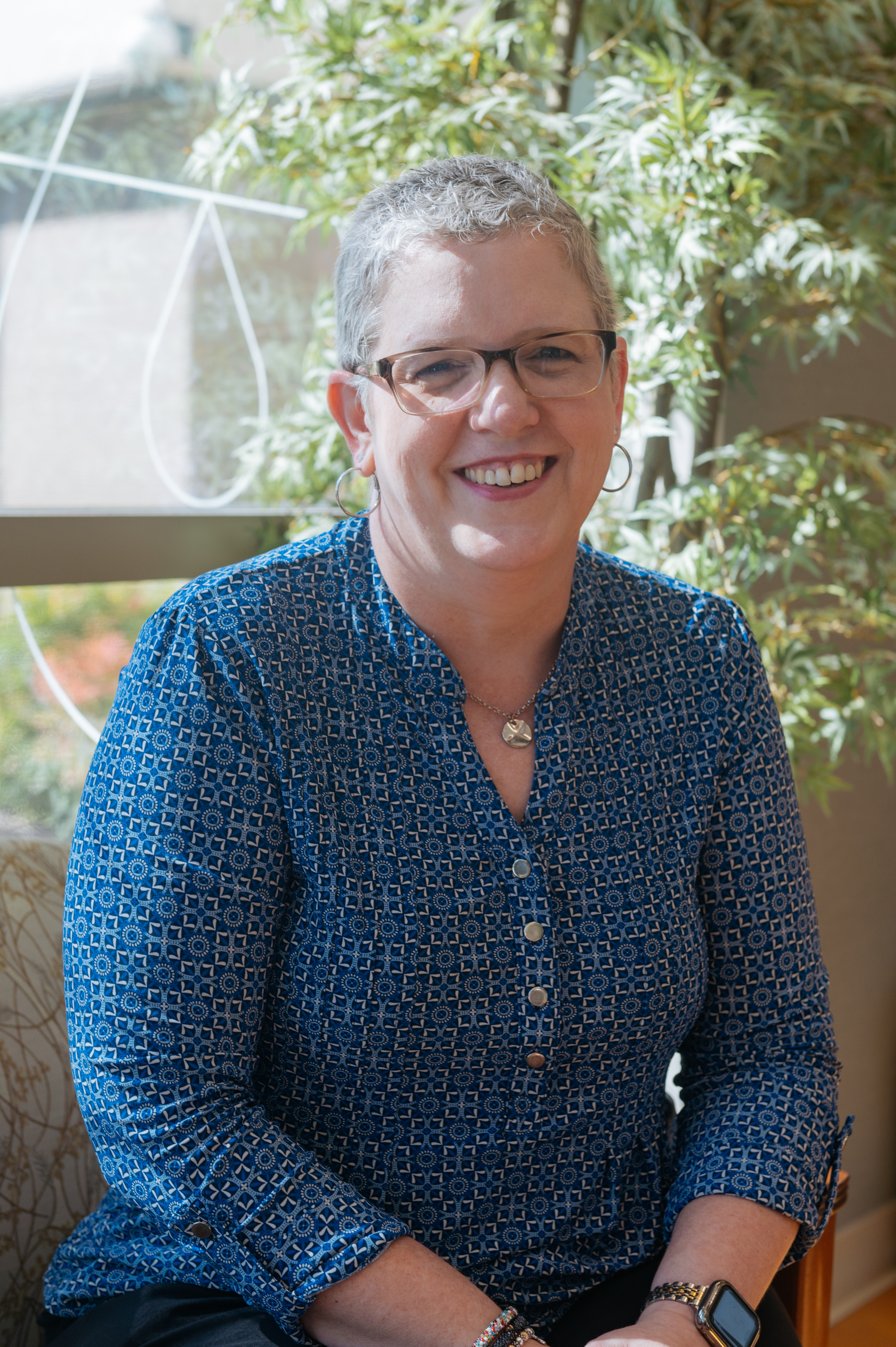
Screening mammogram recommendations generally start at age 40, so Penny Travers hadn’t gotten one yet when she first found a lump in her breast.
“I found a lump a couple weeks after my 40th birthday,” said Travers, who lives in Hebron.
This was in April 2013. Travers was diagnosed with HER2-positive invasive ductal carcinoma, and that June, David Sechler, MD, FACS, performed a bilateral mastectomy on her. Her first mammogram was also her last mammogram.
Before surgery, Travers’ cancer was estimated to be at stage two, though after surgery, she was diagnosed at stage three, she said. Four out of 12 lymph nodes tested positive.
Starting July 31, 2013, she had four rounds of Adriamycin and Cytoxan (AC) chemotherapy every two weeks, with Neulasta support, then weekly Taxol and Herceptin from Sept. 26 through Dec. 12 of the same year. She continued the Herceptin every three weeks to complete a year.
Travers also had 32 rounds of radiation.
She had reconstructive surgery, but her body didn’t cooperate with the synthetic implants and she ended up traveling for a DIEP flap surgery in 2015. DIEP stands for deep inferior epigastric perforator, and this procedure allows a surgeon to use tissue from the woman’s own lower belly to create breasts.
Travers kept up with her follow-up appointments, which at first were three to six months apart, then a year. She also did genetic testing, and found she didn’t have mutations in her BRCA genes.
She’s now being treated for uterine cancer, which she said is not connected to the breast cancer. After experiencing bleeding in October 2025, she called her gynecologist, and was treated by Dwight Im, MD, FACOG, who leads TidalHealth Gynecologic Oncology at the TidalHealth Richard A. Henson Cancer Institute. Dr. Im performed a full hysterectomy on her.
Travers had chemotherapy at the TidalHealth Allen Cancer Center in Seaford until May, had radiation treatments at the TidalHealth Richard A. Henson Cancer Institute in Salisbury in July and early August, and she is now undergoing immunotherapy treatments at the TidalHealth Allen Cancer Center.
She formed connections with the TidalHealth nurses, who still remember her from her breast cancer treatments more than a decade earlier.
Travers expressed the importance of screenings. Though she’d only just reached the recommended screening age for her first mammogram when she found her breast cancer lump, she had been going to annual exams and regular gynecology appointments.
“If you can get screened early, then do it,” she said.
She also recommended that people educate themselves and talk with others to help determine what questions to ask their care team. Don’t rely on Google for everything.
Travers has had great experiences with all her doctors, but suggests that anyone who isn’t comfortable with their doctor should find someone new. Having a doctor that you like can help with your mental health, and she also said it’s important to go out and do things — if you’re able to.
Now, Travers spreads cancer awareness regularly, with regular Facebook updates on her care. She also serves as the survivor reception chair for Relay for Life of Wicomico County.
Breast Cancer Awareness Month
If you're a woman age 40 or older or at higher risk, are you up to date on your mammograms? Ask your primary care practitioner about getting a mammogram, find a screening location near you, or set up an appointment with TidalHealth Mobile Mammography. Members of the community can also support the Sheila Zimmer Breast Screenings Fund here. The fund helps remove financial barriers to care by providing breast screenings and support up to diagnosis for patients who are uninsured or underinsured.